
Spring 2026 Reflections – Part 2: Co-creation, Circularity, and New Perspectives

Top Circularity Trends for 2026
Over the last 15 years, it has moved from an abstract idea to an actionable strategy that businesses and governments around the world are actively embracing. As Rob Opsomer, executive lead for plastics at the Ellen MacArthur Foundation, has highlighted, circularity is no longer a “nice to have” sustainability add-on — it is becoming part of companies’ everyday decision-making.
At the same time, the public and business narrative is shifting from alarming scarcity and crisis talk toward meaningful value creation. Plastics, textiles, and other so-called “waste” streams are no longer framed purely as environmental burdens. Instead, they reveal:
– opportunities for new markets built around repair, rental, resale, and reuse
– gaps in how products are designed and managed
– failures in infrastructure, incentives, and system coordination
This change in perspective opens the door to innovation that is not only regenerative but also profitable.
Several developments are expected to accelerate this transition. Experts point to new regulations across Europe and beyond, emerging AI-based sorting technologies, and the growing popularity of pre-loved and second-hand products as key drivers of circular growth.
Indeed, 2026 has been described as a “pivotal year” for scaling circularity. Tove Andersen, CEO of TOMRA — a global leader in reverse vending machines and sensor-based sorting systems — argues that the coming years will mark a shift from preparation to large-scale action. But is this optimism justified?
Let’s look at the major changes and trends ahead at the systemic, infrastructure, and policy levels.
New Ownership Models – Access Over Ownership

As Jonquil Hackenberg, CEO of the Ellen MacArthur Foundation, has noted, the most circular product is often “the one you don’t need to own.” Increasingly, products are turning into services as companies shift from selling individual items to offering ongoing access and maintenance. This model changes the consumer mindset from ownership to use, and supports circularity by:
– extending product lifespans through maintenance and repair
– enabling reuse across multiple users
– keeping materials in circulation for longer
This shift is closely connected to the broader rise of rentals, resale, and repairing. Wardrobe studies in the Nordic countries, including Finland, show that around 40% of people own between 101 and 200 items of clothing. At the same time, research by the Danish Consumer Council suggests that nearly 40% of garments owned by consumers aged 25–50 are inactive or rarely used. These unused items represent a significant waste of energy, materials, and value already invested in production.
Meanwhile, another trend is gaining momentum. The cost-of-living crisis and the popularity of platforms such as eBay and Vinted have encouraged more people to buy and sell pre-loved items. Repair cafés and community mending initiatives are also growing across Europe. According to Libby Peake, Senior Fellow and Head of Resource Policy at Green Alliance, these refurbishing communities do more than save money — they help people feel part of a community, which has a positive impact on mental wellbeing and makes circular participation more intuitive and appealing.
All this signals a clear transition from ownership toward service and communal living. Shared spaces such as offices, schools, and housing communities are becoming natural circular hubs that encourage collective responsibility for materials and waste.

Niimaar’s solutions fit directly into this shift. Designed for shared environments, Niimaar products support community use without feeling institutional or utilitarian. Instead, they help create welcoming, functional spaces where sorting, reuse, and circular habits become a natural part of everyday life.
Circularity Moves Upstream – Design Before Recycling

Regulations are tightening, and producers are increasingly accountable for the materials they place on the market. Companies that invest in circular solutions at scale are set to benefit. According to Dr. Atalay Atasu, Professor of Technology and Operations Management at INSEAD, circularity should remain strategic at the company level to ensure continuity and deliver tangible business value.
Upstream thinking means addressing materials and production processes from the start. Products should be designed with:
– durability and long-term use
– repair and disassembly
– recyclability and reuse
This approach reduces downstream costs and risks — meaning the challenges that appear later in the supply chain, including distribution, use, and end-of-life management. Procurement teams play a critical role by prioritizing recycled content, verified materials, and suppliers that follow circular principles.

Circular design is increasingly central to regulation. Manufacturers are becoming responsible for the full lifecycle of their products under Extended Producer Responsibility (EPR) rules. In 2025, the EU introduced EPR for textiles, targeting a high-impact material stream affected by:
– low collection rates
– inconsistent recycling infrastructure
– the growing volume of fast fashion
A key enabler of this shift is the Digital Product Passport (DPP), introduced under the Ecodesign for Sustainable Products Regulation (ESPR) in 2024. The DPP will become mandatory in 2027 for priority product groups — including textiles, electronics, batteries, iron, steel, aluminium, and furniture — with full rollout by 2030. Each passport contains digital records of:
– material composition
– carbon footprint
– repairability and spare parts
– end-of-life instructions
Niimaar embodies this upstream approach. The company sources its plywood from Koskisen, a sustainable Finnish manufacturer, ensuring ethical and circular material use. The plywood is durable, degradable, and versatile, allowing it to be reused for gardening, storage, resale, or other applications — extending its lifecycle and keeping value in circulation.
Scaling circularity through infrastructure
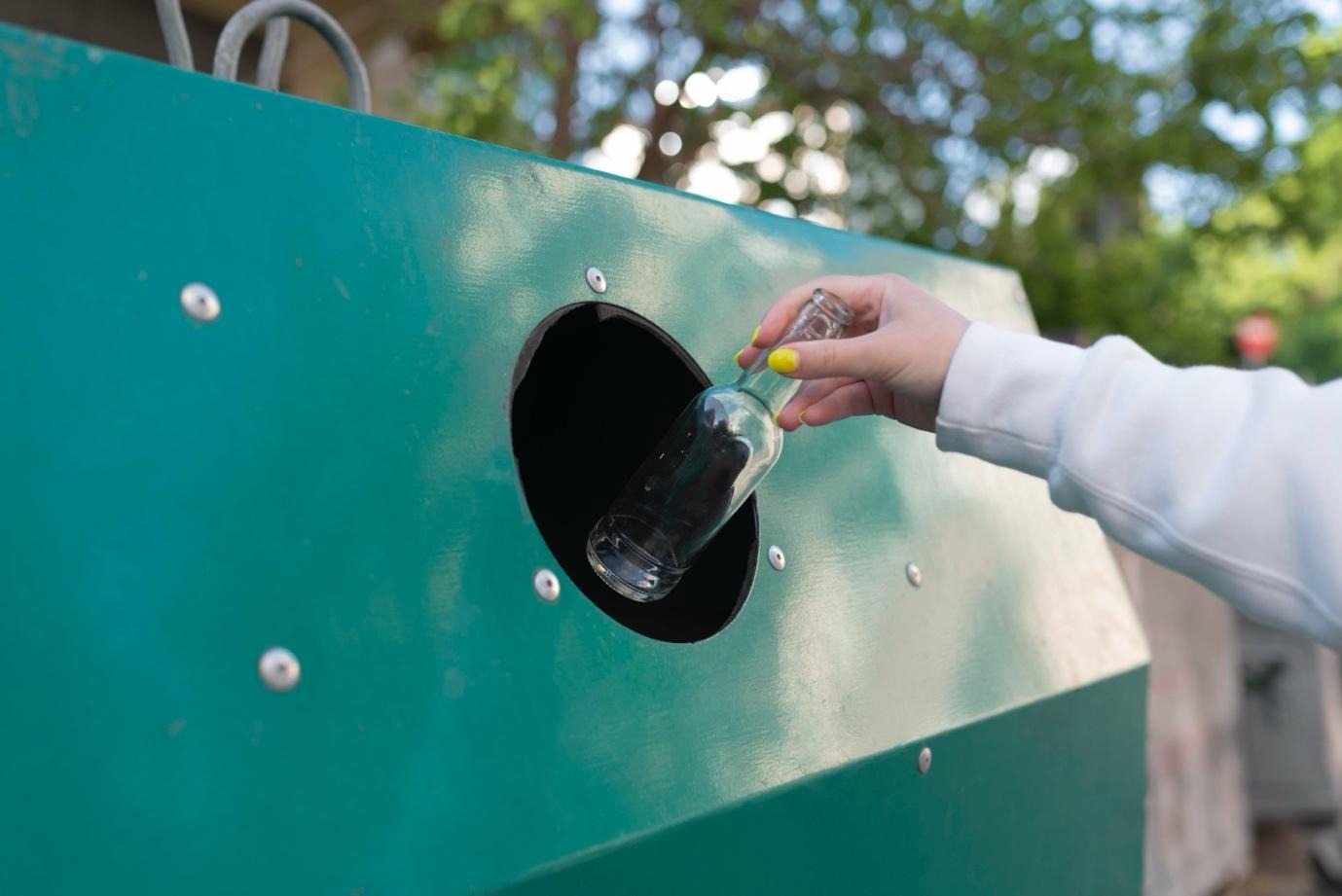
Circularity is increasingly being treated as a core industrial strategy, rather than just a sustainability add-on. Driven by climate targets, material scarcity, competitiveness, and geopolitical tensions around resource imports, leading businesses and regions are embedding circularity into operational planning.
Circularity is now seen as both a risk management tool and a regulatory requirement. Companies that adopt circular practices reduce exposure to supply chain disruptions and stay ahead of evolving rules, including:
– CSRD – Corporate Sustainability Reporting Directive
– PPWR – Packaging and Packaging Waste Regulation
– Circular Economy Act
For example, PPWR, which enters into force on 12 August 2026, covers all packaging and packaged products sold in the EU. It also mandates a 90% separate collection target for plastic beverage bottles and cans by 2029. Meanwhile, the Circular Economy Act, due in 2026, will establish a Single Market for secondary raw materials, increasing the supply of high-quality recycled materials and stimulating demand across the EU.

Technological advances are also accelerating circularity. AI-driven digital services and deep learning complement sensor-based sorting, enabling:
– recognition of complex material composites
– real-time adjustment of sorting parameters
– increased sorting efficiency and reduced reliance on manual labor
– better data collection and reporting for compliance purposes
These systems also allow the sorting of new material streams, such as separating food from non-food plastics. Electronics, another rapidly growing waste stream, will also be more meaningfully embedded in circular systems in 2026, according to John Shegerian, CEO of e-waste recycler ERI.
Cities and municipalities are adopting smart infrastructure to manage waste and resources more efficiently. Solutions include:
– RFID tagging for packaging and materials
– QR codes for product identification
– expanded deposit return systems for bottles, cans, and packaging

Niimaar contributes to this circular infrastructure by making recycling intuitive and accessible in public spaces. Its products and consulting support help companies comply with regulations, streamline sorting, and reduce costsassociated with mixed waste management. By integrating well-designed recycling stations into offices, schools, and public areas, Niimaar ensures that sustainable practices feel natural, easy, and engaging.
Sources:
Maldini, I. & Haugrønning, V. (2023). Studying clothing consumption volumes through wardrobe studies: a methodological reflection. 5th Product Lifetimes and the Environment (PLATE) Conference, Espoo, Finland. https://www.researchgate.net/publication/373824655
Telaketju (2024). Vaatteen käyttökertojen seuranta – turhaa ajanhukkaa vai kulutuksen tolkullistamisen apuri? Turku AMK Telaketju -blogi. https://telaketju.turkuamk.fi/blogi/vaatteen-kayttokertojen-seuranta-turhaa-ajanhukkaa-vai-kulutuksen-tolkullistamisen-apuri/
Nordic Council of Ministers (2024). TemaNord 2024:547 – The Nordic Textile Collaboration: Final Report – Results and Recommendations. https://pub.norden.org/temanord2024-547/3-1-about-the-initiative.html
Hailstone, J. (2025). Will 2026 be a breakout year for the circular economy? Forbes. https://www.forbes.com/sites/jamiehailstone/2025/12/15/will-2026-be-a-breakout-year-for-the-circular-economy/
KPMG Finland (2025). Digital Product Passport (DPP) – mitä yritysten tulee tietää? https://kpmg.com/fi/en/insights/esg/digital-product-passport-dpp.html
European Union (2025). Regulation (EU) 2025/40 – Ecodesign for Sustainable Products. EUR-Lex. https://eur-lex.europa.eu/eli/reg/2025/40/oj/eng
European Commission (2025). Packaging and Packaging Waste Regulation. https://environment.ec.europa.eu/topics/waste-and-recycling/packaging-waste/packaging-packaging-waste-regulation_en
EU Data Portal (2025). Digital Product Passport – advancing transparency and sustainability. https://data.europa.eu/fi/news-events/news/eus-digital-product-passport-advancing-transparency-and-sustainability
Sitra (2025). Digital Product Passports in Finland – project overview. https://www.sitra.fi/en/projects/digital-product-passports/
WBCSD (2025). A global framework to measure, manage and communicate business circularity. https://www.wbcsd.org/resources/a-global-framework-to-measure-manage-and-communicate-business-circularity/
European Commission (2025). New rules boost recycling efficiency for waste batteries. https://environment.ec.europa.eu/news/new-rules-boost-recycling-efficiency-waste-batteries-2025-07-04_en
TOMRA (2025). Circular technology trends in 2026 – from preparation to action. https://www.tomra.com/news-and-media/news/2025/circular-technology-trends-in-2026-turning-preparation-to-action
Reconomy (2026). Circular economy trends 2026. https://www.reconomy.com/2026/01/29/circular-economy-trends-2026/
Reverse Logistics Group (2025). Global EPR & circular economy trends 2025–2026. https://rev-log.com/global-epr-circular-economy-trends-2025-2026/
Ellen MacArthur Foundation (2026). What’s next for the circular economy in 2026? Podcast. https://www.ellenmacarthurfoundation.org/podcasts/whats-next-for-the-circular-economy-in-2026
Jaa Tarina