Spring 2026 Reflections – Part 2: Co-creation, Circularity, and New Perspectives
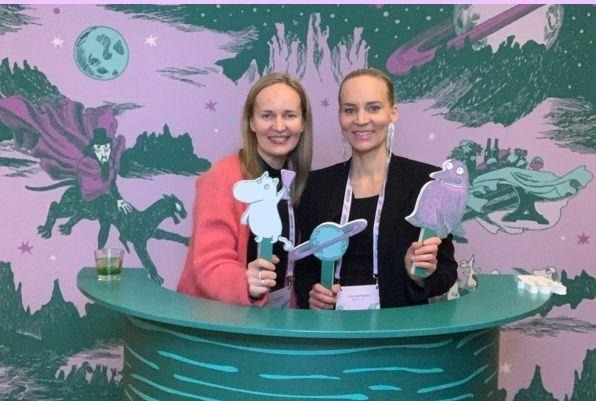
March was brightened by the Moomin Licensee Event. We are honored to be a licensee of the Moomin Characters that preserves the heritage of beloved Tove Jansson. We are proud to share values such as love, equity, inclusion, and respect for nature, all of which strongly resonate with Niimaar’s own mission. In particular, we are happy to use the Moomin well-known characters that each bring a very unique philosophical meaning to the product.
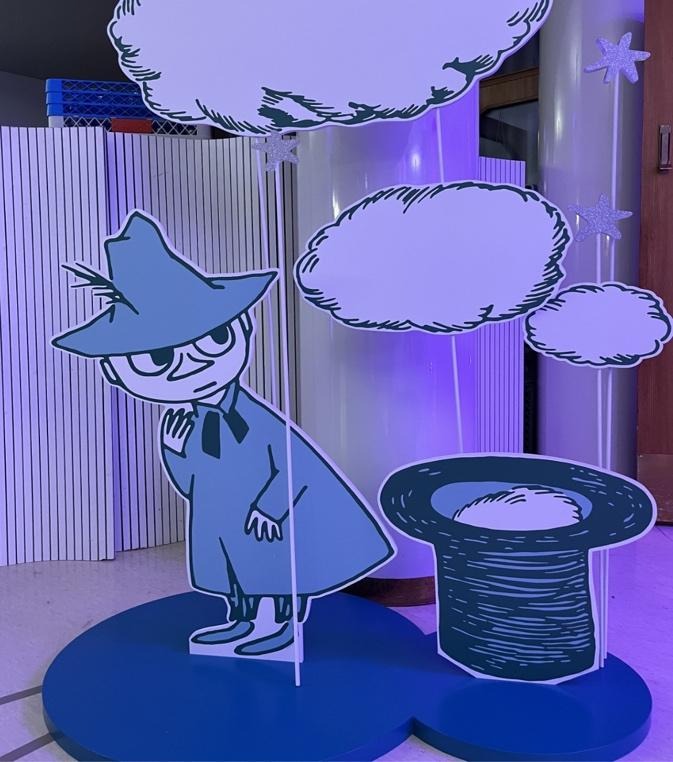
The event once again felt like a gathering of an extended family, offering a deeper look into the company’s history, sustainability initiatives, and plans. From responsible theme park, recyclable packaging solutions to donation initiatives such as #OURSEA campaign, the event highlighted how sustainability can be embedded throughout a brand’s design and operations.
It was also inspiring to learn how the company continues to embrace innovation in its growth strategy through the application of design tools, artificial intelligence, and games, while remaining true to its heritage and values.
Helsinki Design Thursday
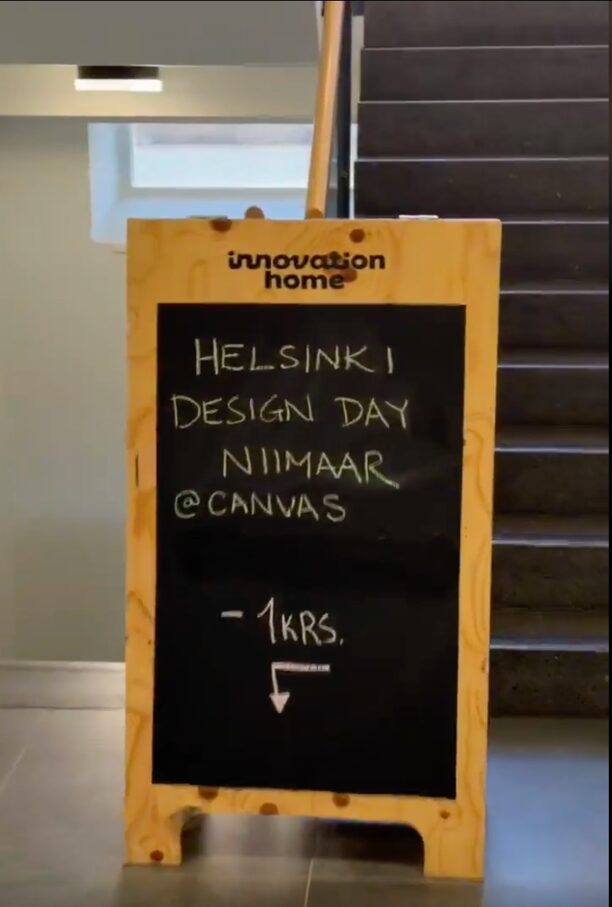
April brought the vibrant energy of Helsinki Design Thursday. The city was filled with open showrooms, presentations, exhibitions, and discussions that brought together professionals from the design field.
Niimaar took a caridge to participate by organising a showroom in Kamppi Innovation Home and hosting a workshop led by the industrial designer Eero Brandt, who has collaborated with Niimaar for several years.
One of Eero’s key observations was that products often fail not because they are poorly designed, but because designers build them around assumptions about how people ”should” behave. Indeed, this idea was supported by the research suggesting that misalignment of the design and the actual user needs may increase the user’s cognitive load and reduce usability (Chen et al., 2024). It also highlights the importance of integrating user research, co-design and risk analysis into the product development.
Eero also emphasized that people do not follow the instructions, but follow the space around them and their own interests. The best solution is one that requires a little conscious effort from the user. This perspective aligns with principles discussed by the Interaction Design Foundation that define user behavior as the actual interaction between people and products, influenced by factors such as motivation, emotions, cognitive biases, previous experiences, culture, and environmental context.
For the company, the major challenge is to make sustainable design understandable. Otherwise, it will stay invisible and unnoticed. At Niimaar, we strive to apply these principles in designing every detail of our products. We try to ensure that each touchpoint, including visual, tactile, emotional, and practical experience, meets the user’s needs. We promote a sustainable lifestyle, and consult businesses on the recent legislative updates to keep their motivation for recycling. Through our natural colour palette, the tactile qualities of wooden materials, and the imagery featured in our educational leaflets, we aim to influence users’ perceptions and shape how they interact with the product. We try to make the experience smooth, comfortable, and pleasing. We want recycling furniture to become a stylish and integrated part of interior spaces rather than being perceived as purely utilitarian waste bins hidden away under a sink or out of sight.
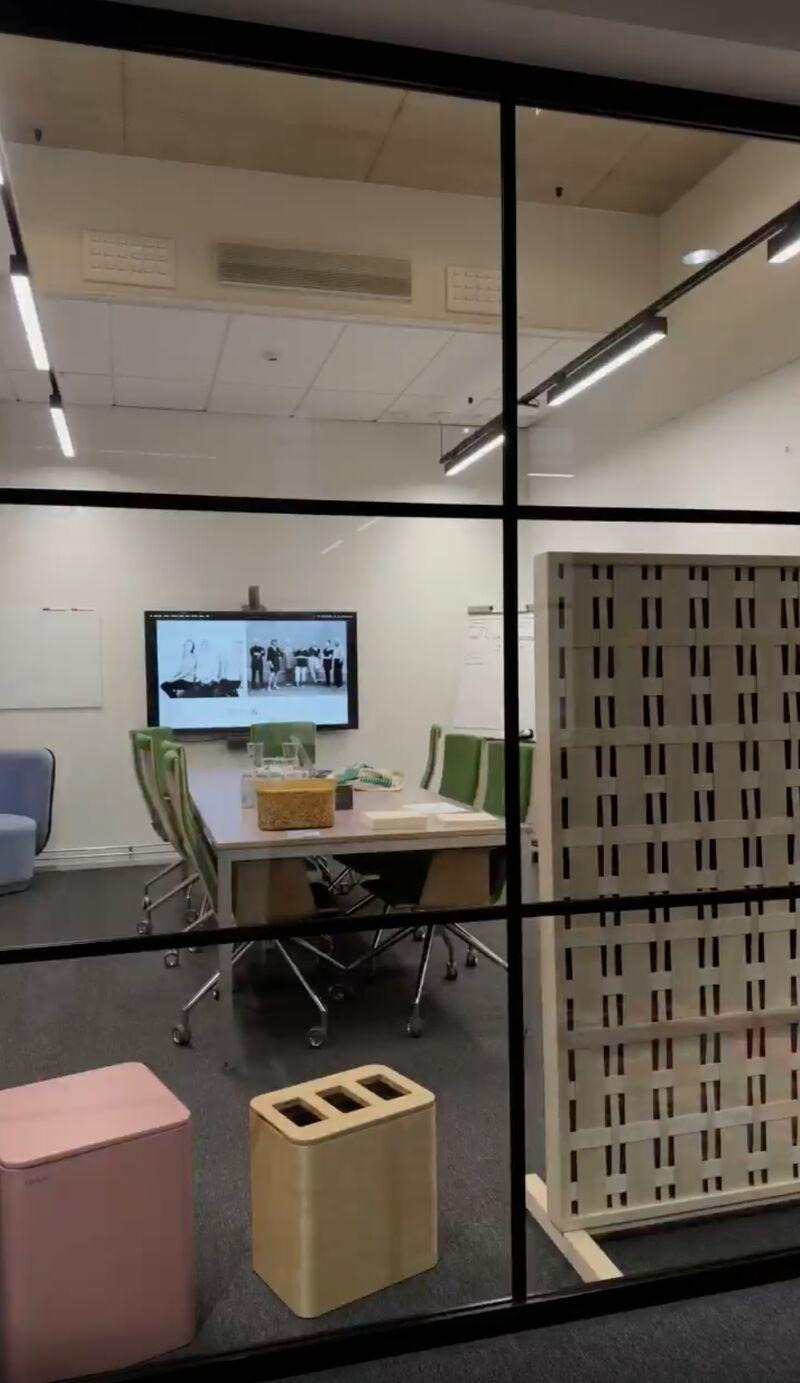
During the workshop, participants from fields including sustainable fashion, communications, NGOs, design, and business were challenged to explore how design can encourage more sustainable behaviour. The key question was how to make recycling in the workplace more intuitive and engaging.
Although Niimaar invests significant effort in promoting sustainable practices, we get feedback from our clients that our users do not always interact with our recycling systems as intended. The major reasons behind this were that customers may not understand recycling guidelines, some cultural differences, or the space surrounding the product, whether it is located in a concert hall, open office space, museum, or hotel.
Together with our guests and Eero, we explored how design can guide sustainable behaviour, whether through recycling, reuse, or waste reduction. Participants engaged in ideation sessions, prototyping exercises, and final presentations, resulting in a range of creative and inspiring solutions.
Helsinki Pop-Up Event
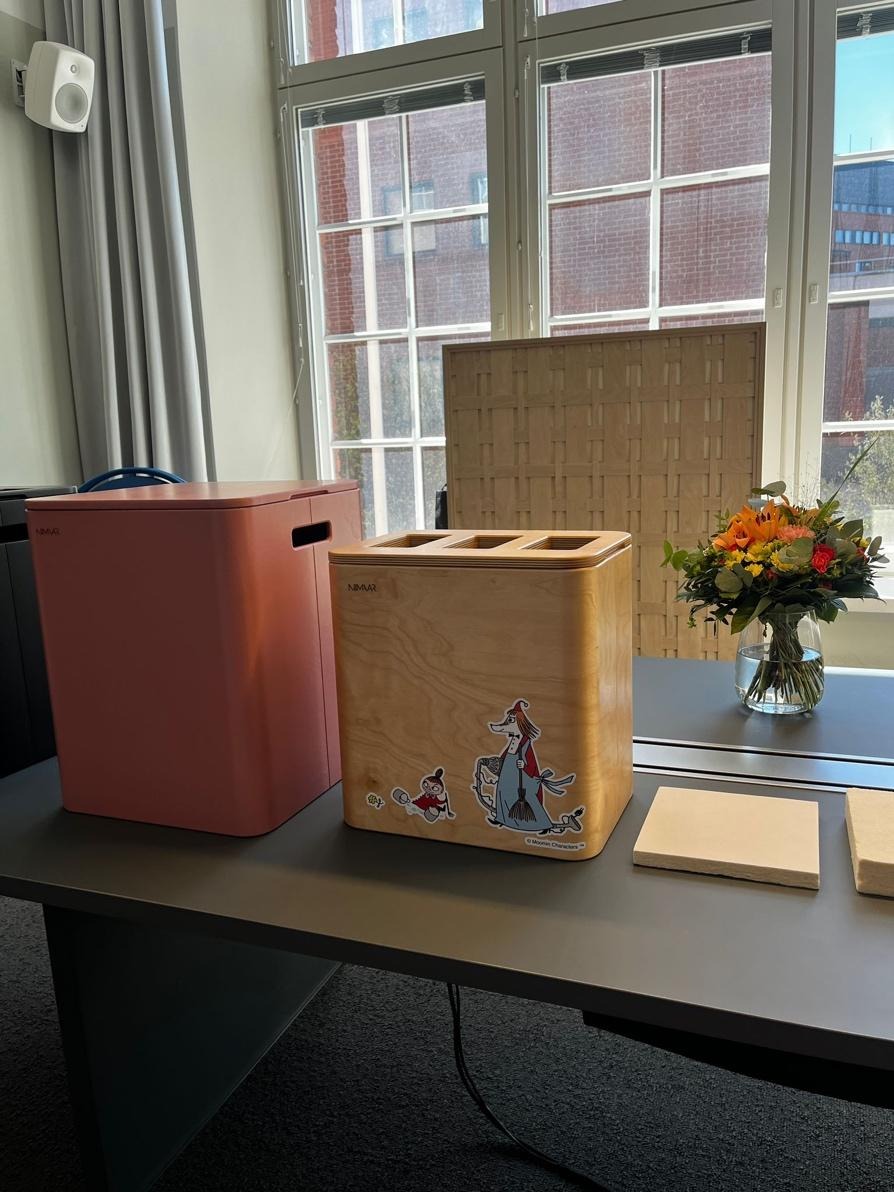
May started with the first Input Pop-Up event organised by our partners Input Interior at the Miltton office in Helsinki.
We strongly believe that design is not only about creativity but also about relationships. Networking within the design community provides valuable access to manufacturers, suppliers, retailers, and material innovators. More importantly, it is about learning from like-minded professionals and maintaining a continuous exchange of ideas that helps businesses remain adaptable and agile.
For Niimaar, it was inspiring to spend the day surrounded by design professionals, creative minds, sustainability enthusiasts, and people passionate about creating more thoughtful, aesthetic, and responsible spaces.
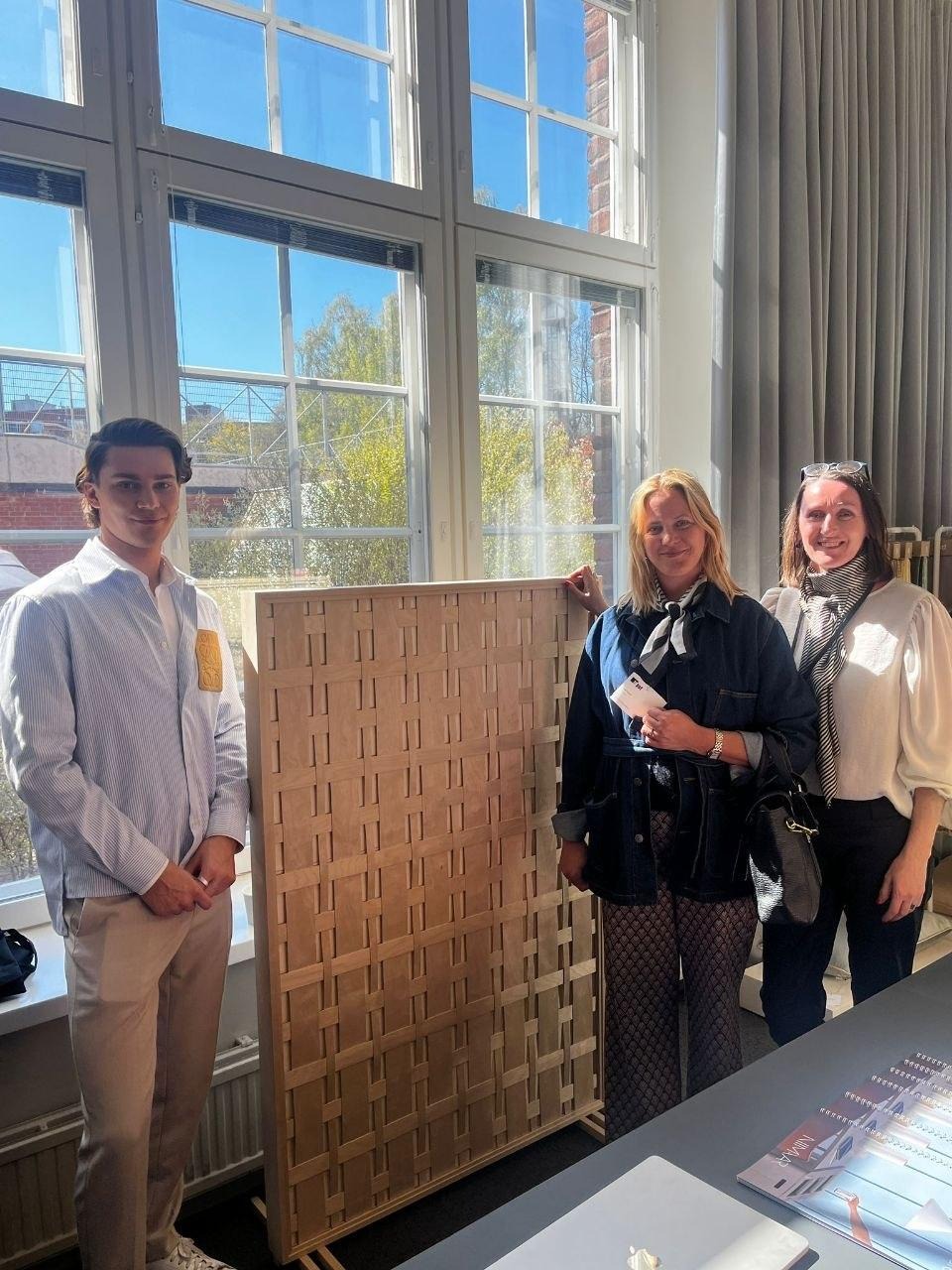
A particularly important milestone was the presentation of our new product, Tyyne, an acoustic panel developed from side-stream materials together with Sistem. The showroom prototype was produced by OrotosDemos.
It is produced completely from surplus oak materials originating from yacht production, embracing principles of responsible material consumption and premium design. We drew inspiration from the national Finnish tradition of using hardwoods in bark waving.
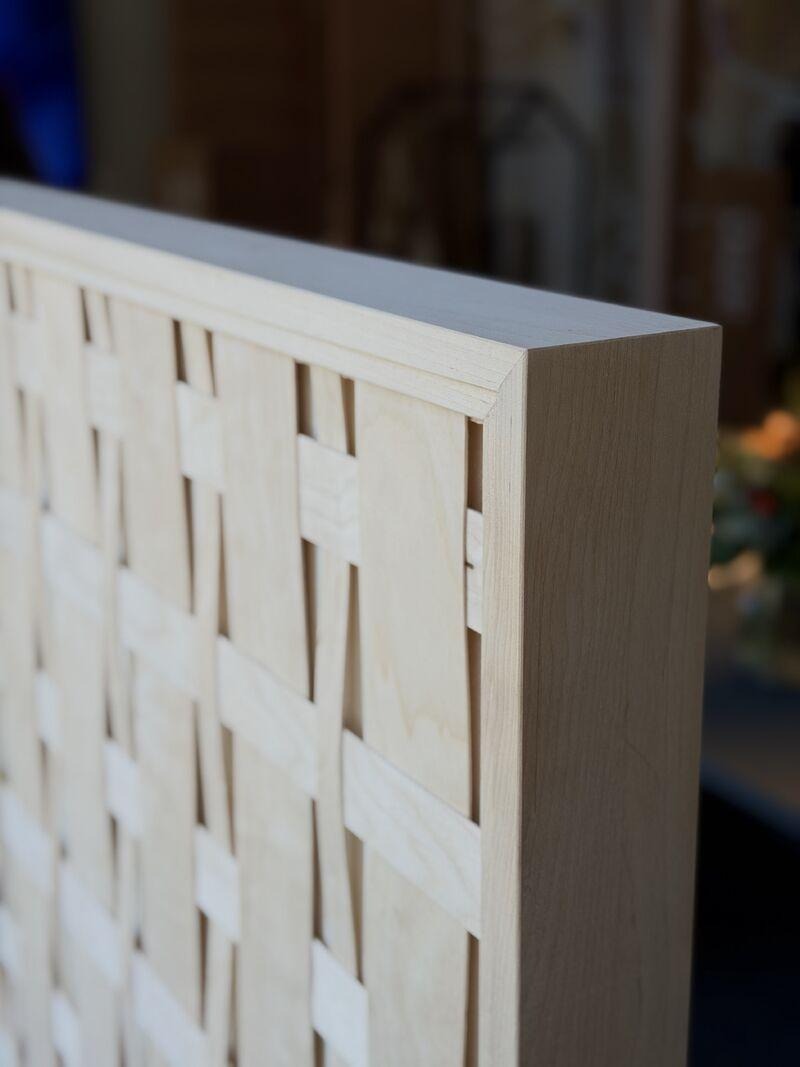
Tyyne combines functionality, sustainability, and aesthetics. The acoustic panels help reduce noise in offices and homes, create a greater sense of privacy, and bring elements of nature and biophilic design into interior spaces.
As spring turns into summer, we continue working on refining our brand voice and conducting user research to better understand our target audience. Our goal is to ensure that our product concepts align with genuine customer needs while communicating their value as clearly and effectively as possible.
Looking back, one lesson stands out above all others: meaningful innovation is rarely created alone. Every workshop, discussion, partnership, and event this spring has reinforced the importance of collaboration, curiosity, and continuous learning in building a more circular future.
References:
Interaction Design Foundation. (n.d.). What is user behavior? Interaction Design Foundation. URL: https://ixdf.org/literature/topics/user-behavior
Chen, J., Li, Z., Wang, W., Wang, Y., & He, Z. (2024). Research on a service touchpoint design model driven by smart technology based on Kano–Failure Modes and Effects Analysis. Behavioral Sciences, 14(5), 390. URL: https://mdpi-res.com/sensors/sensors-24-07854/article_deploy/sensors-24-07854.pdf?version=1733716454
Jaa Tarina